use code 'Clubdiscount' to receive 15% off when purchasing 10 or more decks

How to Lead Every Player Differently and Get Better Results Using Situational Leadership
Situational Leadership gives soccer coaches a practical framework for adjusting their leadership style to match each player's experience and ability, so every player in the squad gets the kind of guidance they actually need to develop.
LEADERSHIP
Ben Foulis
6/1/202614 min read
Situational Leadership
Stand on the touchline of any youth soccer training session and watch a coach who really knows their players. They are firm and instructional with the nervous newcomer who joined three weeks ago. They are patient and explanatory with the group still learning the basics. They are encouraging and hands-off with the self-motivated player who has been training for three years. And they are having a peer-level conversation with the most experienced player on the squad, asking for input rather than issuing instructions.
That coach may not know it, but they are practicing Situational Leadership. They are adjusting their approach based on who they are talking to rather than applying the same style to everyone. Situational Leadership gives that instinct a name, a structure, and a framework that makes it easier to apply deliberately rather than accidentally.
History and Origins
Situational Leadership was developed by Paul Hersey and Ken Blanchard and introduced in their 1969 book Management of Organizational Behavior. Hersey was a behavioral scientist and Blanchard was a management researcher, and together they challenged one of the dominant assumptions of leadership theory at the time: that effective leaders have a single, consistent style that they apply across all situations.
Their research argued that leadership effectiveness depends not on the style itself but on how well the style matches the readiness of the person being led. They defined readiness as a combination of two things: competence, meaning the skill and knowledge a person has for a specific task, and commitment, meaning their motivation and confidence to perform it. A person who is new to a task has low readiness regardless of their general ability. A person who is experienced and confident has high readiness. The leader's job is to read that readiness accurately and adjust their approach accordingly.
Hersey and Blanchard identified four leadership styles that map onto four levels of readiness. Telling, which involves high direction and low support, suits low readiness. Selling, which involves high direction and high support, suits developing readiness. Participating, which involves low direction and high support, suits moderate to high readiness. And Delegating, which involves low direction and low support, suits high readiness.
The two researchers later parted ways professionally, and Blanchard developed a refined version of the model called Situational Leadership II, published in the 1980s and updated since. His version renamed the styles Directing, Coaching, Supporting, and Delegating, and refined the definition of readiness into two separate components: competence and commitment. Situational Leadership II became the more widely adopted version in corporate training programs and remains the dominant form of the model used in leadership development today.
Both versions share the same foundational insight: the leader adapts to the individual, not the other way around. That principle is as applicable on a soccer pitch as it is in a boardroom.
Use in Business and the Corporate World
In organizational settings, Situational Leadership became one of the most widely taught leadership frameworks in the world because it addressed a problem that managers encounter constantly: a single leadership style does not work equally well for every member of a team.
The Cost of Style Mismatch
A manager who defaults to a single style regardless of the person in front of them tends to over-manage some team members and under-manage others. A highly directive manager working with an experienced, self-motivated employee creates frustration and disengagement. The employee does not need to be told how to do their job. They need autonomy and trust. Applying direction where delegation is appropriate signals a lack of confidence in the person and erodes the relationship over time.
The reverse is equally damaging. A manager who defaults to a delegating style with a new employee who genuinely needs clear instruction and guidance leaves that person without the support they need to succeed. The new employee may mask their confusion rather than admit they are struggling, which compounds the problem until it becomes visible in their performance.
Organizations that trained managers in Situational Leadership reported a consistent pattern: managers who could accurately read the development level of each team member and adjust their style accordingly produced higher performance, stronger retention, and better morale than those who applied a uniform approach across the team.
Developing People Through the Stages
One of the most valuable applications of Situational Leadership in business is as a development tool rather than simply a management tool. The goal is not to permanently assign a style to a person. It is to move them progressively toward higher readiness so that the leader can eventually delegate with confidence.
A new employee starts at the Directing stage. As they build competence and confidence, the manager shifts toward Coaching, adding more explanation and dialogue to the direction. As the employee's skills grow further, the style shifts to Supporting, where the manager steps back from instruction and focuses on encouragement and collaboration. Finally, when the employee has the competence and commitment to work independently, the manager Delegates, trusting them to own the outcome.
That progression is the goal of Situational Leadership in a corporate context. The manager is not just responding to where the person is today. They are actively working to move them forward.
The Star Whisperer
Before looking at how Situational Leadership applies across youth soccer, it is worth pausing on one of the most compelling real-world examples of the framework in action — not in a boardroom, but at the highest level of the game itself.
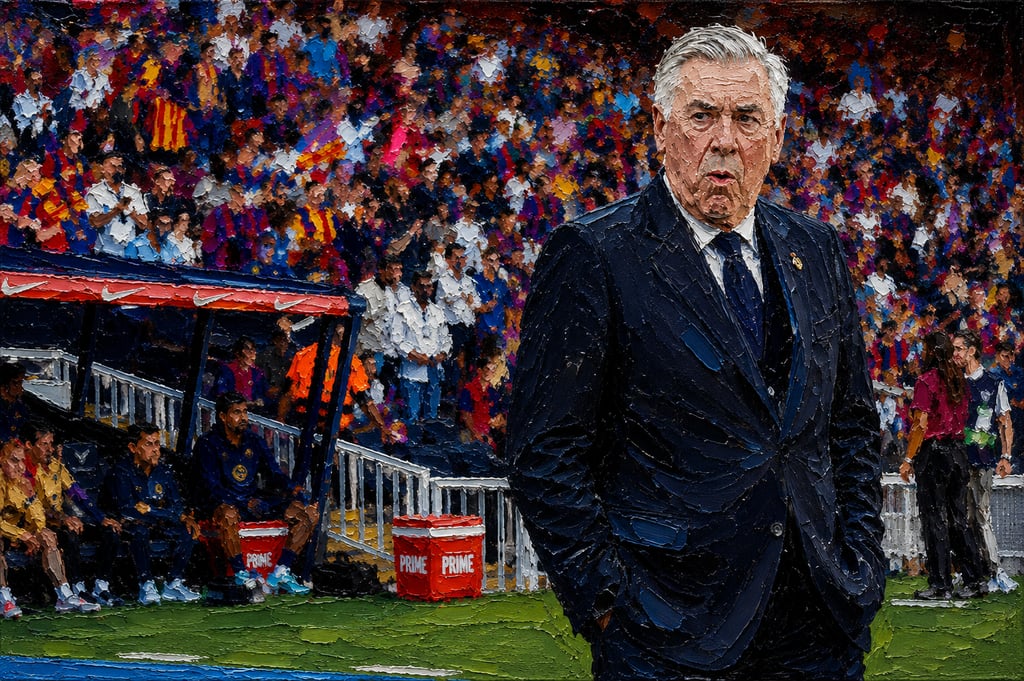
Carlo Ancelotti has won the Champions League four times with three different clubs. He has managed some of the most gifted and complicated players in the history of the sport. And throughout his career, he has built a reputation that no tactics board or training drill can fully explain. He is widely known as a manager who gets the best out of difficult personalities, out of superstars who have clashed with previous coaches, out of players who were written off as unmanageable. The phrase used most often to describe him is the star whisperer.
What Ancelotti actually does, looked at through the lens of Situational Leadership, is read his players with unusual precision and then apply the style that matches what each one needs. At Real Madrid, managing a squad that included players like Luka Modric, Toni Kroos, Karim Benzema, and later Vinicius Jr, he was not directing. He was not running detailed tactical sessions that told elite professionals how to do what they had spent their entire careers mastering. He was Supporting and Delegating. He was creating an environment where players with exceptional competence and strong individual identities felt trusted, understood, and free to express what they already had.
His genius was not the style itself. Any coach can step back and give players freedom. Ancelotti's genius was the read. He correctly identified that this particular group of players had the readiness to be trusted with that freedom, and he had the confidence as a coach to provide it without feeling threatened by the space it created. He also understood each player as an individual. He knew which ones needed a quiet word of belief before a big match, which ones needed to feel the tactical structure around them, and which ones simply needed to know the coach had their back regardless of what happened on the pitch.
That is Situational Leadership at its most sophisticated. And it is the same framework, scaled down and adapted for the context, that a youth soccer coach applies every time they consciously adjust their approach to fit the player in front of them.
Situational Leadership on the Soccer Pitch
The parallel between Situational Leadership in business and coaching in soccer is closer than it might initially appear. A soccer coach is not managing a uniform group. They are managing a collection of individuals at vastly different stages of development, often within the same squad, the same training session, and sometimes the same drill.
A coach running a session with twenty players might have three who have never played organized soccer before, eight who have been playing for a year or two and are developing solidly, six who are experienced and self-motivated, and three who are among the most capable players in the club. Each of those groups needs something different from the coach. And in many cases, so does each individual within each group.
The four Situational Leadership styles translate directly into coaching practice.
Directing
Directing involves high instruction and close guidance with low expectation of independent decision-making. The coach tells the player what to do, how to do it, and gives immediate feedback on execution.
This style suits players who are new to the game or new to a specific skill. A player who has just joined the squad and is learning basic ball control, positional awareness, or the rules of the game needs clear, patient, specific instruction. They do not yet have the competence to work things out independently, and asking them to figure things out on their own at this stage produces confusion rather than development.
Directing is also the appropriate style for the youngest age groups regardless of experience. Under sixes and under sevens do not yet have the cognitive capacity to process tactical concepts, reflect on their performance, or take ownership of their development. They need to be shown, told, and shown again, with warmth and repetition. The coach is the source of all information at this stage, and that is entirely appropriate.
The risk with Directing is applying it too broadly or for too long. A player who has developed genuine competence but is still being directed at every turn will start to feel micromanaged. Their confidence will plateau and their intrinsic motivation will begin to drop, because the message they receive is that they cannot be trusted to make decisions.
Coaching
The Coaching style within Situational Leadership involves both direction and dialogue. The coach still provides significant guidance but begins to explain the reasoning behind instructions and invites the player into a two-way conversation about their development.
This style suits players who are building competence but may lack consistency or confidence. They understand the basics but are still developing their ability to apply them under pressure or in new situations. They benefit from a coach who not only tells them what to do but helps them understand why, and who asks questions that develop their soccer intelligence alongside their technical ability.
A coach working in this style might stop a drill, ask a player what they saw before they made a particular decision, listen to the answer, and then explain what an alternative read of the situation might have looked like. The player is being developed rather than simply corrected. Over time, that kind of dialogue builds the decision-making capacity that technical instruction alone cannot produce.
This style is particularly well suited to players in the ten to fourteen age range who are developing rapidly and beginning to engage with the tactical side of the game. They have enough experience to have an opinion about what they did and why, and a coach who treats that opinion seriously accelerates their development significantly.
Supporting
The Supporting style involves stepping back from instruction and focusing instead on encouragement, collaboration, and confidence-building. The coach trusts the player's competence and provides high support without high direction.
This style suits players who have the technical ability to perform but may lack the confidence or self-belief to do so consistently. They know what to do. The obstacle is not knowledge or skill — it is the psychological barrier between knowing and doing. A player who freezes in front of goal despite having the finishing ability to score, or a player who drops out of positions they have been trained to take when the match pressure increases, often needs Supporting rather than more instruction.
A coach in Supporting mode asks more than they tell. They check in with the player, create space for the player to reflect on their own performance, celebrate competence when they see it, and provide the kind of quiet, consistent confidence in the player that the player cannot yet provide for themselves. The goal is to move the player toward a point where they no longer need that external affirmation because they have internalized it.
Supporting is also relevant with teenage athletes who are capable but are navigating the self-consciousness and emotional complexity that comes with adolescence. A fourteen-year-old who was confident and expressive at eleven may become hesitant and withdrawn at thirteen, not because their ability has declined but because the social stakes of performing in front of peers have increased dramatically. That player does not need more direction. They need a coach who sees their ability clearly and communicates that belief consistently.
Delegating
Delegating involves stepping back from both direction and support and trusting the player to manage their own development and performance. The coach is available but does not impose. The player owns the process.
This style suits the most experienced and self-motivated players in the squad. A player who understands the game deeply, consistently applies what they know under pressure, and actively seeks out ways to improve does not need the coach directing or coaching their every move. They need space to express what they already have.
In practice, Delegating might look like asking a senior player to lead a warm-up, to take responsibility for organizing the defensive line during a match, or to mentor a newer player in the squad. It might mean having a peer-level conversation about tactics before a game rather than delivering a brief. The coach is still present and still responsible, but the relationship has shifted from leader and follower to something closer to collaboration.
It is worth noting that Delegating is not the absence of coaching. It is a deliberate choice to give a capable, committed player the autonomy they have earned. The coach should still be observing, still be available, and still be ready to shift back toward a more supportive or directive style if circumstances change, such as if the player loses form, faces a new challenge, or moves into a new position.
Managing Multiple Styles in a Single Session
The real complexity of Situational Leadership in soccer coaching is not choosing the right style for one player. It is holding four different styles simultaneously for twenty different players across a ninety-minute session.
A coach setting up a passing drill might direct the newer players through the movement pattern step by step, coach the developing players by asking them what they are looking for before they receive the ball, offer a brief word of encouragement to a capable player who has been hesitant lately, and simply watch the most advanced player execute, trusting that they do not need intervention.
That is four different leadership interactions happening in parallel, within the same drill, within the same few minutes. Most coaches with experience do this naturally. Situational Leadership gives them a framework to do it consciously, which means they are less likely to default to one style across the whole group when the session is busy or the pressure is on.
Situational Leadership tells you how to lead each individual in your squad. Tuckman's Stages of Group Development gives you the parallel lens for the team as a whole, because where the group is in its development will shape the context every individual player is operating in.
The Risk of Misreading Readiness
A coach is managing a session, watching the game, processing information from twenty directions at once. They are not always going to get the readiness read right for every player in every session, and that is an honest reality of the job.
That said, it is worth being aware of the two most common misreads. The first is treating a capable but anxious player as low competence, responding to their hesitance with more direction when what they actually need is support and belief. More instruction does not help a player whose obstacle is confidence. It adds to the pressure they are already feeling.
The second is delegating to a player who appears confident but is actually masking low ability or confusion. Some players, particularly teenagers, become very skilled at projecting competence to avoid being singled out. A coach who takes that projection at face value and steps back entirely may not realize the player is struggling until the gap in their development becomes visible in a match.
Neither of these misreads is catastrophic, and neither requires the coach to conduct a detailed psychological assessment of every player before every session. They simply require a general awareness that confidence and competence are not always the same thing, and that readiness is worth checking occasionally rather than assuming.
A player's readiness is not just about technical ability. Confidence, belonging, and feeling psychologically safe all affect how a player shows up in any given session. Maslow's Hierarchy of Needs gives you a practical framework for understanding the needs that sit underneath those shifts in readiness.
Benefits for Coaches
Every Player Gets What They Need
The most direct benefit of Situational Leadership is that it prevents the coach from applying a one-size-fits-all approach to a group of individuals who are at genuinely different stages. A squad develops faster when each player is being led in the way that matches where they actually are, rather than where the coach assumes they are or where the average player in the group happens to be.
A Roadmap for Player Development
Situational Leadership gives the coach a clear developmental direction for every player. The goal is always to move each player progressively toward greater readiness. A player who starts the season needing Direction should be receiving more Coaching by mid-season, and ideally some Supporting toward the end. Tracking that progression gives the coach a concrete measure of development that goes beyond technical skills.
Stronger Squad Cohesion
When players feel they are being led in a way that fits them personally, they feel seen. A newer player who is given clear, patient direction does not feel lost. An experienced player who is given autonomy does not feel suffocated. That sense of being understood and appropriately challenged contributes to a squad culture where players at every stage feel they belong.
Overcoming Challenges
The Temptation to Default to One Style
Under pressure, most coaches revert to their default style. A naturally directive coach becomes more directive when things are not going well. A naturally supportive coach becomes more supportive when the group is struggling. Situational Leadership asks coaches to resist that pull and instead ask what the individual player needs in this moment, even when the session is demanding and the focus is stretched.
Readiness Changes
A player's readiness is not fixed. Form drops, confidence fluctuates, new positions create new development needs, and external factors in a player's life can shift their engagement significantly from one week to the next. A player who was operating confidently in Supporting mode last month may need more Coaching this month after a run of poor performances knocked their confidence. The coach needs to stay observant and remain willing to adjust.
One Squad, Four Styles
The most experienced coaches understand something that takes time to learn: there is no single right way to lead a player, and there is no single player who needs the same thing from their coach throughout an entire season. Readiness shifts, confidence rises and falls, new challenges create new development needs, and the coach who stays attentive to those changes is the one whose players develop most consistently.
Situational Leadership does not add complexity to coaching. It gives a name and a structure to something effective coaches are already doing. And when that structure is applied with awareness, the result is a squad where every player, from the nervous newcomer to the most experienced leader on the pitch, feels they are being led in a way that actually fits where they are.
Situational Leadership tells you how to adapt your approach to the individual in front of you. If you want to understand the bigger coaching philosophy that sits behind that kind of player-centred thinking, transformational leadership sets out what you are ultimately trying to build.
That is not a small thing. For many young players, it is the difference between staying in the game and walking away from it.
Resources
Situational Leadership: Being a Leader Might Depend on Context. OpenLearn, The Open University. A free course module from the Open University covering the Hersey and Blanchard situational leadership model, explaining how the four styles map onto different levels of follower readiness and why no single leadership style is universally effective.
Plaza-Mejía, M. et al. (2025). The Hersey and Blanchard's Situational Leadership Model Revisited: Its Role in Sustainable Organizational Development. World, MDPI. A peer-reviewed open-access review of the Situational Leadership Model across fifty years of organizational research, evaluating its continued relevance and examining the empirical evidence for matching leadership style to follower readiness.
Jin, L. et al. (2022). Effects of Leadership Style on Coach-Athlete Relationship, Athletes' Motivations, and Athlete Satisfaction. Frontiers in Psychology, PubMed Central (NIH). A peer-reviewed open-access study with 298 student-athletes demonstrating that coach leadership style directly shapes the coach-athlete relationship, athlete motivation, and satisfaction, with situational leadership principles cited as central to understanding why adaptive coaching approaches outperform fixed ones.
Hu, X. et al. (2025). Direct and Indirect Effects of Coaching Leadership Style on Athlete Engagement. Frontiers in Psychology, PubMed Central (NIH). A peer-reviewed open-access study demonstrating that coaches who continuously recalibrate their leadership style in response to athletes' changing technical and psychological states produce significantly higher levels of athlete engagement than those who apply a fixed approach.
Varghese, A. et al. (2025). Empowering Young Athletes: The Influence of Autonomy-Supportive Coaching on Resilience, Optimism, and Development. Frontiers in Psychology, PubMed Central (NIH). A peer-reviewed open-access study showing that coaching style has a profound impact on young athletes' long-term development, with autonomy-supportive approaches, the equivalent of Situational Leadership's Supporting and Delegating styles, producing the strongest outcomes for resilience and growth.
© 2026. All rights reserved.
Smart Coaching Systems Pty Ltd | 81-83 Campbell St, Surry Hills NSW, 2010 | ABN: 48 670 375 443